Falls from height cause injuries and fatalities in workplaces that often exceed expectations. In high-risk environments such as construction sites, industrial facilities, and logistics warehouses, fall accidents have become one of the most lethal occupational hazards. However, many enterprises still lack systematic hazard identification methods, resulting in insufficient targeted protective measures.
The key to protection lies in understanding—only by recognizing the specific fall risks that employees face can effective protection schemes be developed. This guideline provides a detailed analysis of three major types of falls in the workplace and helps you establish a complete safety system spanning identification, protection, and maintenance.
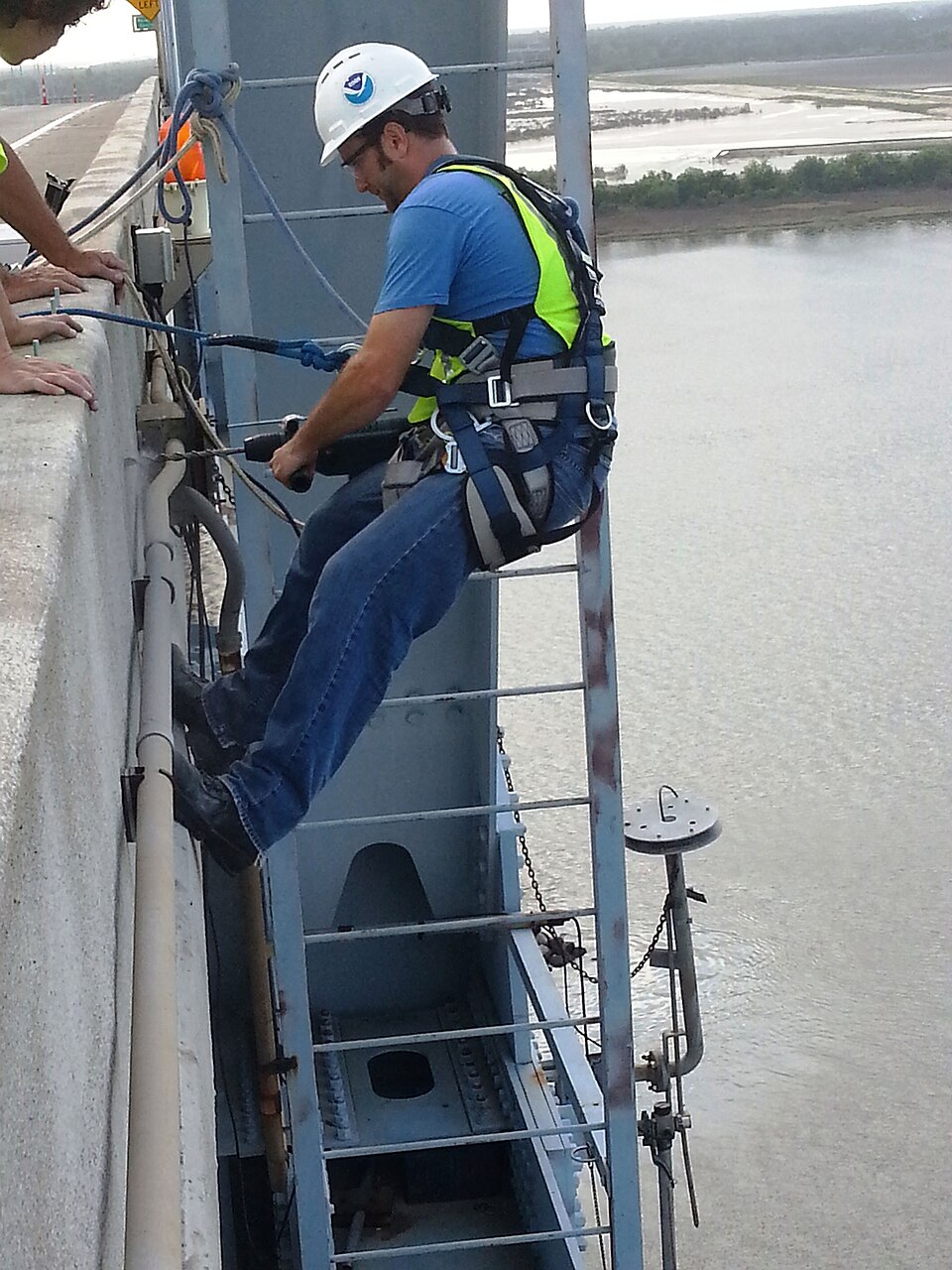
Three Major Types of Falls and Their Protection Schemes
1. Same-Level Falls: The Most Common Risk
Same-level falls represent the highest frequency type and are also most easily overlooked. These accidents occur on work surfaces when employees suffer injuries from slipping or tripping.
Primary causes:
Tripping originates from disorganized work environments—uneven ground surfaces, randomly placed cables, improperly stacked materials, or obscured step differences. Such scenarios are most common in warehouses, workshops, and construction sites. While employees concentrate on their work, they frequently step into depressions or are tripped by protruding objects, losing balance instantaneously.
Slipping relates directly to ground surface friction. Oil contamination, standing water, frozen surfaces, or worn-out shoe soles on employee footwear all significantly reduce anti-slip performance. Risk is particularly prominent in environments such as food processing facilities, mechanical maintenance workshops, and restaurant kitchens where conditions are wet or oily.
Protection Strategies: Although same-level falls appear straightforward, prevention requires systematic management:
Environmental sanitation—Establish daily cleaning procedures to promptly remove oil stains and water. Intensify de-icing treatment in iced areas during winter
Passage organization—Establish material stacking standards, prohibiting cable installation or obstacle placement in passageways. Provide prominent marking and warning signs for uneven areas and step differences
Personal protective equipment—Provide employees with safety shoes meeting anti-slip performance standards, particularly important in wet or oily environments. Regularly inspect shoe sole treads and promptly replace worn footwear
Passive protection—Install handrails and guardrails at critical locations such as stairways, height differences, and corners. Lay anti-slip mats or anti-slip tape strips in slippery areas, creating multiple layers of protection
These foundational measures can effectively prevent over 70 percent of same-level fall accidents.
2. Falls from Height: The Most Serious Danger
Falls from elevated positions such as mezzanines, work platforms, or scaffolding to the ground or lower levels represent the most lethal type of workplace fall.
According to Chinese safety standards, work at height is defined as: work with potential for falling from a fall height reference level of 2 meters or above. This seemingly brief definition contains the harsh reality of physics—falling from a height of 2 meters is sufficient to cause serious injury, while falling from 6 meters or higher almost inevitably results in serious injury or death. The human body's capacity to withstand impact has limits, and exceeding this threshold results in irreversible harm.
Scientific fall protection system composition: Protecting against this type of risk requires a complete active fall protection system, with core components including:
Full-body safety harness—Must comply with GB 6095-2021 "Fall Protection Safety Harness" standard. The critical aspect is selecting a "full-body" design rather than one covering only the waist:
Full-body safety harnesses distribute impact force evenly across shoulders, waist, and thighs, significantly reducing single-point injury
Must feature multiple attachment points with support at shoulders, waist, and legs
User body weight plus tools and clothing must not exceed 100 kilograms
Self-retracting lifeline (SRL)—This is the "brain" of the entire protection system. Its operating principle is:
During normal work, the rope extends freely and employee movement is unrestricted
Upon sensing abnormal acceleration (fall signal), the device locks instantly within 0.5-1 second
The rope completely arrests the employee within a 3-meter range, preventing excessive impact force
Must undergo regular inspection to ensure locking sensitivity meets standards
High-strength safety rope and anti-slip connectors—Use rope materials with high tensile strength; connectors employ anti-slip designs ensuring they do not accidentally disconnect during emergency braking
Certified anchorage points—This aspect is most easily overlooked yet most critical. Anchorage points must be engineered fixed points capable of withstanding pull force exceeding 5 tons. "Appearing sturdy" does not equal "sufficient load capacity"—many tragedies occur because employees attach to locations that appear solid but lack actual load capacity.
How this system protects life: When an employee accidentally loses footing and falls, the self-retracting lifeline instantly activates, applying strong braking force to the rope, completely halting the fall within 3 meters. This braking process significantly reduces impact velocity and impact force, converting a potentially fatal fall into a survivable event.
3. Swing Falls: An Underestimated Hazard
Swing falls are the most easily overlooked yet extremely dangerous type. They occur in situations where an employee falls from an elevated position, though wearing a fall protection system, but the anchorage point is not directly overhead.
Harm mechanism: Imagine an employee working on a building roof or aircraft fuselage with a fall protection rope attached to a fixed point located off to the side. Upon losing footing, the employee does not fall vertically; instead, the rope forms an angle and the employee swings like a pendulum toward the anchorage point. During this arc-shaped swinging motion, the body is highly susceptible to high-speed impact with surrounding pipes, beams, antennas, or other equipment.
Consequences of swing falls are extremely severe:
Spinal injury, potentially resulting in paraplegia
Rib fractures and internal organ damage
Cranial-cerebral trauma
Entrapment in equipment resulting in death
This type of accident occurs at high frequency in specialized fields such as aircraft maintenance, shipbuilding, and high-tower maintenance, yet many managers remain at the level of understanding "wearing a safety belt is safe," unaware that an incorrectly positioned anchorage point may even be more dangerous than not wearing protection at all.
Core principles of protection schemes:
Directly overhead anchorage points—Employees must always attach to fixed points directly overhead. The purpose is to allow the body's center of gravity to descend vertically, eliminating angles that produce swinging. If directly overhead anchorage points do not exist, work schemes should be adjusted rather than "making do" with side anchorage points
When the environment does not permit—Conditions should be created through engineering modifications, such as installing mobile beams, adjusting work height, or replanning work procedures, making directly overhead anchorage points possible
Anti-swing devices—In certain special scenarios where modification is not feasible, anti-swing ropes or shock absorbers may be employed to limit swing magnitude and speed, reducing impact injury
Work process optimization—Redesign work procedures to reduce time employees spend in unstable high-altitude positions, completing tasks in stages
This is not an optional enhancement measure but an indispensable line of defense for life.
Fall Protection Safety: From System to Culture
Success in fall protection depends not only on the sophistication of equipment but also on the strength of safety culture.
Even possessing the best protective equipment, if employees do not understand how it works, do not know how to use it correctly, or are indifferent to safety, the effectiveness of the protection system becomes greatly diminished. Therefore, enterprises must:
Systematic training—Enable every employee to understand the risks of different fall types and master correct equipment usage methods
Management demonstration—Leaders must set examples in daily work, strictly adhere to safety protocols, and transmit signals of "safety first" to employees
Regular maintenance and inspection—Establish equipment inspection and maintenance systems ensuring every protective item functions reliably and effectively at critical moments
Open communication channels—Encourage employees to report risks and propose safety suggestions, establishing a culture of discussion and continuous improvement
The most powerful weapon for preventing fall accidents is a safety culture with full participation and complete commitment from all employees.
Summary
Workplace fall risks are far more complex than surface appearances suggest. Through deep understanding of the three major types—same-level falls, falls from height, and swing falls—you can make more scientific and targeted protection decisions.
The key to fall protection lies in three phases: early identification (risk recognition), scientific protection (selecting correct schemes), and continuous maintenance (ensuring system effectiveness).
Fclimb is dedicated to helping enterprises establish complete fall protection safety systems—including professional hazard assessment, fall protection equipment selection, safety harness testing and certification, systematic employee training, and protective scheme design, providing you with comprehensive essential safety solutions.
Let us work together to create a safer working environment for your employees.