According to data released at the Emergency Management Department’s Q2 2026 press conference, a total of 3,258 production safety accidents occurred nationwide in the first quarter, resulting in 3,122 deaths and missing persons. Among these, falls from height remain the primary fatal risk in the construction, wind power, electric power, and related industries. A particularly concerning trend is that victims in major and greater accidents are predominantly workers with more than five years of service. This highlights a widespread issue—the significant disconnect between practical experience and safety awareness.
Many veteran workers cite “no accidents over many years” as evidence of their safety competence. However, this reasoning is fundamentally the result of survival bias rather than a demonstration of genuine risk control capability.
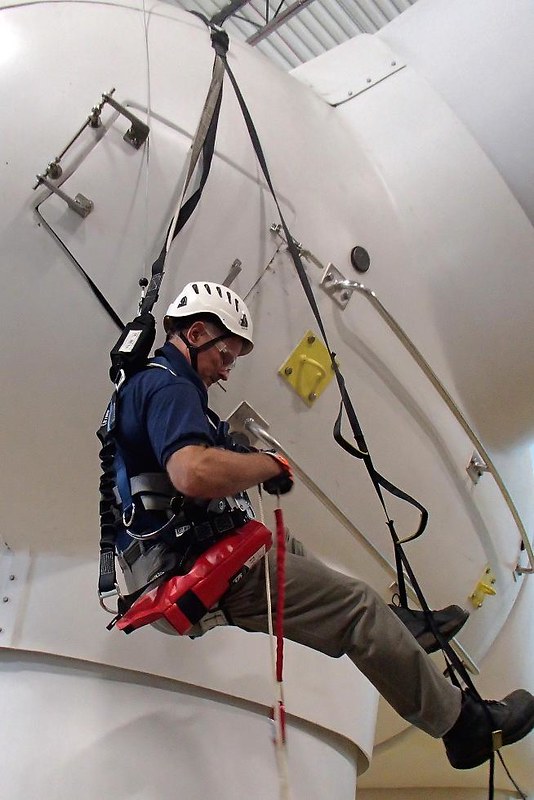
Regulatory Requirements and the Necessity of Certification
Legal Framework
The mandatory regulatory system for working-at-heights safety includes:
| Standard Code | Scope of Application | Core Requirements |
|---|---|---|
| GB3608-2025 | Work height classification | Operations at 2 meters and above are classified as working at heights |
| GB6095-2021 | Safety harness design and certification | Product performance, strength, and durability criteria |
| JGJ59-2011 | Construction safety inspection | Systematic requirements for fall protection measures |
| DL/T854-2019 | Live-line work in power industry | Industry-specific protection specifications |
| National Energy Administration “Wind Farm Safety Production Specifications” | Wind power operations | Operating standards under specific wind speed and weather conditions |
Compliance training and certification are not only essential for safety assurance but also constitute fulfillment of legal obligations. In the event of an accident, training records and certificates become critical evidence for enterprises and practitioners.
Biomechanical and Risk Analysis
From medical and physical perspectives, the injury outcomes of human falls from different heights differ significantly:
Falls from 5–10 meters: Internal organ rupture and spinal injuries, with a survival rate below 20%.
Falls from heights above 10 meters: Catastrophic injuries, with survival probability approaching zero.
These statistics demonstrate that in working-at-heights operations, the absence of any single protective measure can result in fatal consequences.
Common Root Causes of Failure
Field investigation data indicate that more than 80% of fall-from-height accidents are associated with the following factors:
Inappropriate equipment selection or inspection — worn safety harnesses, failed fall arresters, insufficient anchor point strength.
Incorrect system usage — non-standard tying methods, anchor point locations not meeting standards.
Absence of risk assessment — failure to conduct pre-job analysis based on operating conditions.
Inadequate emergency response plans — lack of timely rescue mechanisms following a fall.
The common characteristic of these factors is that they can all be effectively prevented through professional training.
Four Pillars of the Safety Prevention and Control System
Effective working-at-heights safety management requires coordinated efforts across four dimensions:
1. Technical Protection System
This encompasses the correct selection, installation, maintenance, and inspection of hardware such as safety harnesses, fall arresters, and energy absorbers. Hardware failure is often the direct cause of accidents, yet it frequently originates from errors in specification selection during procurement or the lack of ongoing inspection during use.
2. Risk Identification and Assessment
Prior to operations, a systematic hazard analysis must be performed, covering height classification, fall radius, surrounding environment, weather conditions, rescue accessibility, and other factors. This step determines the specific protective measures to be implemented.
3. Emergency Rescue System
This includes prompt rescue following a fall, medical support, and psychological assistance. An incomplete emergency system significantly increases the severity of injury outcomes.
4. Behavioral Habits and Training
Establishment of standardized and proceduralized work processes (inspect → don correctly → verify), with repeated training to develop muscle memory and professional discipline. This is the key to preventing errors caused by “experience-based judgment.”
Pre-Operation Inspection Checklist
| Inspection Item | Acceptance Criteria | Status |
|---|---|---|
| Safety harness integrity | No damage, no corrosion, webbing secure, buckles undeformed | □ Compliant |
| Donning procedure compliance | Dual leg straps, chest restraint, snug fit, no twists | □ Compliant |
| Anchor point safety | ≤1.5 m from work surface, load capacity ≥1,000 kg (10× body weight), free of sharp edges or burrs | □ Compliant |
| Fall arrester functionality | Smooth sliding, sensitive locking mechanism, no signs of damage | □ Compliant |
| Worker condition | No fatigue, no dizziness, mentally alert, physically healthy | □ Compliant |
Any item failing to meet the standard shall result in suspension of operations until corrective actions are completed.
Why Formal Training Is Irreplaceable
Limitations of Self-Study and Knowledge Transmission
Lack of systematic knowledge — individual experience is fragmented and cannot comprehensively cover all safety elements.
Delayed awareness of standard updates — GB, DL, JGJ, and other standards are revised periodically; individuals struggle to stay current.
Legal validity — in disputes, learning records from non-formal channels have no legal standing.
Absence of independent verification — self-study cannot provide objective competency assessment.
Core Value of Formal Training
The objective of formal training is not merely to teach operational details but to develop safety thinking and fundamental principle awareness. Workers possessing this understanding can make risk-based judgments when encountering new environments or equipment, rather than relying blindly on past experience.
Hidden Costs of Accidents
The impact of fall-from-height accidents extends far beyond personal injury:
Family finances: Loss of primary breadwinner income.
Enterprise level: Work stoppage for rectification, fines, reputational damage, insurance claim disputes.
Societal level: Consumption of emergency resources, burden on medical systems, loss of human capital.
Investment in professional training upfront is far lower than the total costs incurred after an accident occurs.
Fclimb’s Solutions
Fclimb is committed to establishing systematic and sustainable fall protection safety frameworks for high-risk industries such as wind power, electric power, and construction.
Our services include: ✓ Professional training programsCustomized training solutions based on enterprise-specific operational characteristics, covering theory, case studies, and practical exercises in a complete chain. ✓ On-site safety assessmentsProfessional diagnostics of work environments, equipment, and personnel to identify hidden hazards. ✓ Equipment inspection and certificationRegular testing and management of updates for critical equipment such as safety harnesses and fall arresters. ✓ Emergency rescue plansDevelopment of actionable emergency response protocols tailored to specific operating conditions. ✓ Long-term consulting supportProvision of ongoing technical guidance and standard update services.
Conclusion
Safety in working at heights is not a cost, but a safeguard for lives and families, as well as the foundation for compliant enterprise operations.
Selecting professional training means exchanging systematic upfront investment for long-term risk mitigation. For every worker engaged in working at heights, this is not only an occupational responsibility but also a commitment to oneself and one’s family.