Falls are the leading cause of death in construction. Yet many companies still have critical blind spots in their protection programs. The issue is usually not the absence of safety measures, but the failure to address risk points that are easy to overlook. This article highlights three of the most common gaps in fall protection—and how to close them.
1. Hidden fall hazards
Large, visible openings are often well protected. The real danger is usually in places that look safe.
1) Skylights and roof lights: the least obvious killer
When workers see glass or plastic covering an opening, they often assume it can be stepped on—or even used as a place to sit and rest. But a skylight is, in essence, still a hole in the roof. Its purpose is to keep out animals, debris, rain, and snow, not to bear human weight. If a skylight is rated for 80 kg and a 90 kg worker steps onto it, the result can be a fatal fall.
2) Ladders: a seriously underestimated risk
Many people see ladders as simple tools rather than part of “work at height,” so they overlook the need for fall protection. That is a dangerous misconception. Any task involving elevation should be included in the company’s fall protection management system—including ladder work.
3) Other hidden risk points
| Hazard location | Common issue | Potential consequence |
|---|---|---|
| Floor openings | Poor or faded warning labels | Stepping through and falling |
| Pipe or vent openings | Temporary covers are unsecured | Sudden collapse |
| Temporary work platforms | Missing or damaged guardrails | Edge falls |
Key prevention measures
Carry out regular professional risk assessments
Do not focus only on large, obvious openings. Risks should be reassessed whenever work phases change, workers move to a new site, or weather conditions shift.
Identify hidden hazards for new workers before they start
Safety supervisors should walk new employees through the site, point out all concealed hazards one by one, and document the acknowledgement.
2. Equipment failure can be more dangerous than having no equipment at all
A safety harness may look intact while gradually deteriorating. Faulty protective equipment creates a false sense of security—and that can make the outcome even worse.
Common failure modes of safety harnesses
UV exposure
→ webbing strength degradesRepeated bending and flexing
→ metal parts develop fatigue cracksSweat, oil, and chemical contamination
→ corrosion, rust, and mildewHidden internal damage
→ the surface appears normal, but internal fibers have already broken
Hidden damage is the most dangerous, because failure may occur suddenly only when the equipment is loaded—and by then, it is too late.
A three-level inspection system
1) Routine inspection (before each use, by the worker)
Under GB 6095, each harness should be checked visually and by touch before every use:
Webbing: cuts, abrasion, discoloration, contamination
Metal components: corrosion, deformation, cracks
D-rings: secure attachment
Buckles and connectors: proper opening and closing function
2) Annual inspection (by a qualified body)
Assess integrity of internal fibers
Test strength of metal components
Issue a formal inspection report
Apply an inspection label showing the next due date
3) Equipment files and inspection records
Each harness should have its own record file documenting routine checks and annual inspections. These records are more than an administrative formality—they are evidence that the company has fulfilled its safety responsibilities. In the event of an accident, the completeness of inspection records may directly affect legal liability.
3. Without timely rescue, protection only delays tragedy
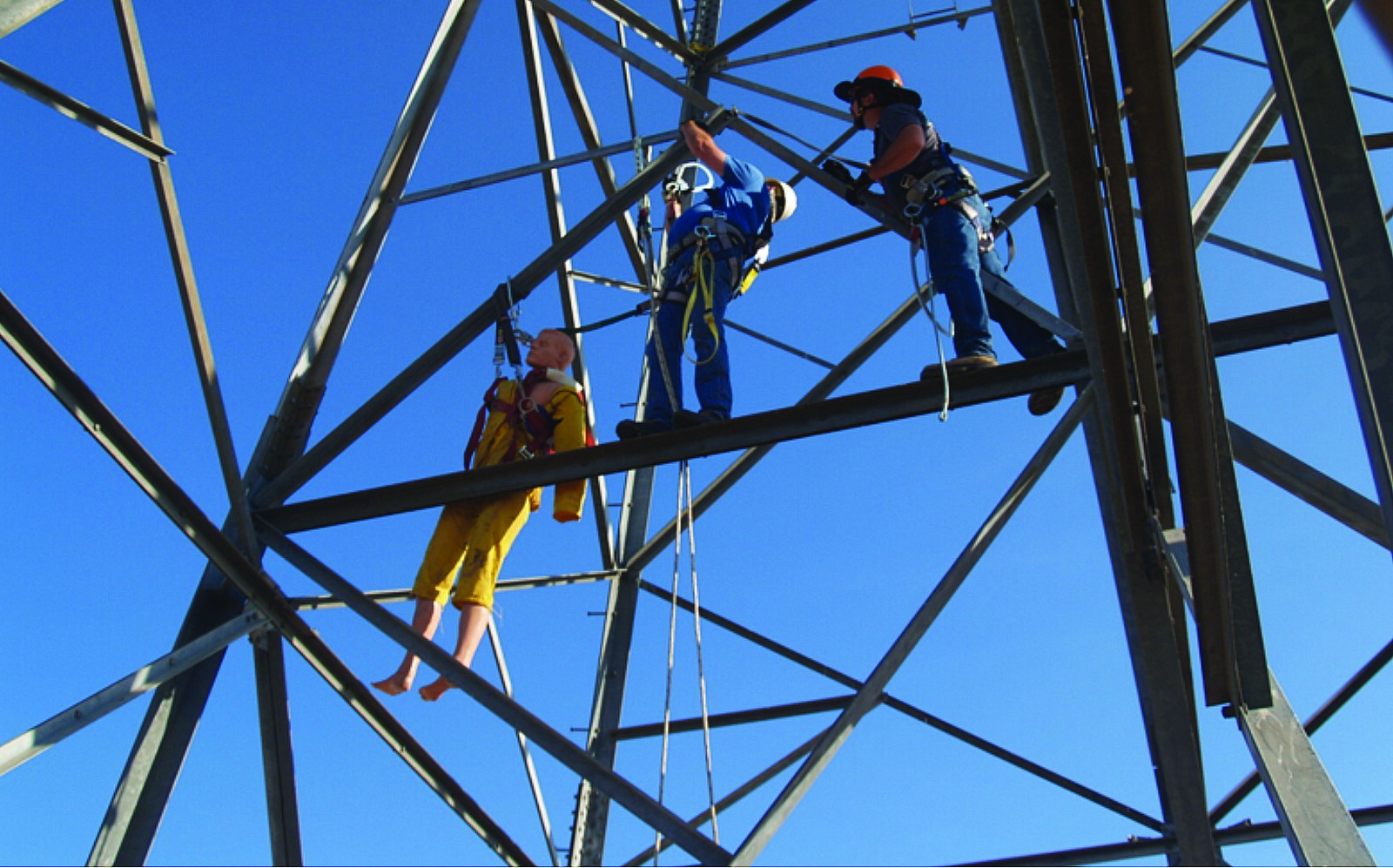
Even the best fall protection equipment cannot prevent a fatal outcome if there is no fast, effective rescue system behind it. In that case, protection may only delay the tragedy rather than stop it.
The golden rescue window: 15 minutes
When a worker is left suspended in a harness, the body can deteriorate very quickly:
| Time after suspension | Physical condition | Risk level |
|---|---|---|
| 1–3 minutes | Rapid heartbeat, waist pressure, conscious | Moderate |
| 5–10 minutes | Blood pooling in the head, breathing difficulty, muscle spasms | Severe |
| 12–15 minutes | Circulation severely impaired, irregular heartbeat, organ failure begins | Critical |
This condition is known medically as suspension trauma. A worker who appears alive after rescue may still die hours later if not treated properly.
What a complete emergency rescue plan should include
1) A dedicated rescue team
At least two trained personnel on standby
Clearly assigned roles and responsibilities
2) Rescue equipment that is always ready
Rescue ropes, pulley systems, stretchers
Radios, first-aid kits, emergency lighting
Equipment lists posted in visible locations and checked regularly
3) A clear rescue process
Detection → alert → arrival within 2 minutes → assessment → controlled lowering → first aid → hospital transfer
4) Regular drills
At least once every quarter
Record response times and review lessons learned
Involve local medical or fire services where possible
5) Protection for rescuers as well
Rescuers must use an independent fall arrest system
They must never share the suspended worker’s rope or equipment
A rescuer’s fall will only escalate the incident