When personnel access a roof to service equipment, where should the safety harness be connected? How can continuous protection be maintained while personnel move? If an incident occurs, how should rescue be carried out?
Selection of a horizontal lifeline system should begin with these practical questions, rather than simply asking “how much per meter.”
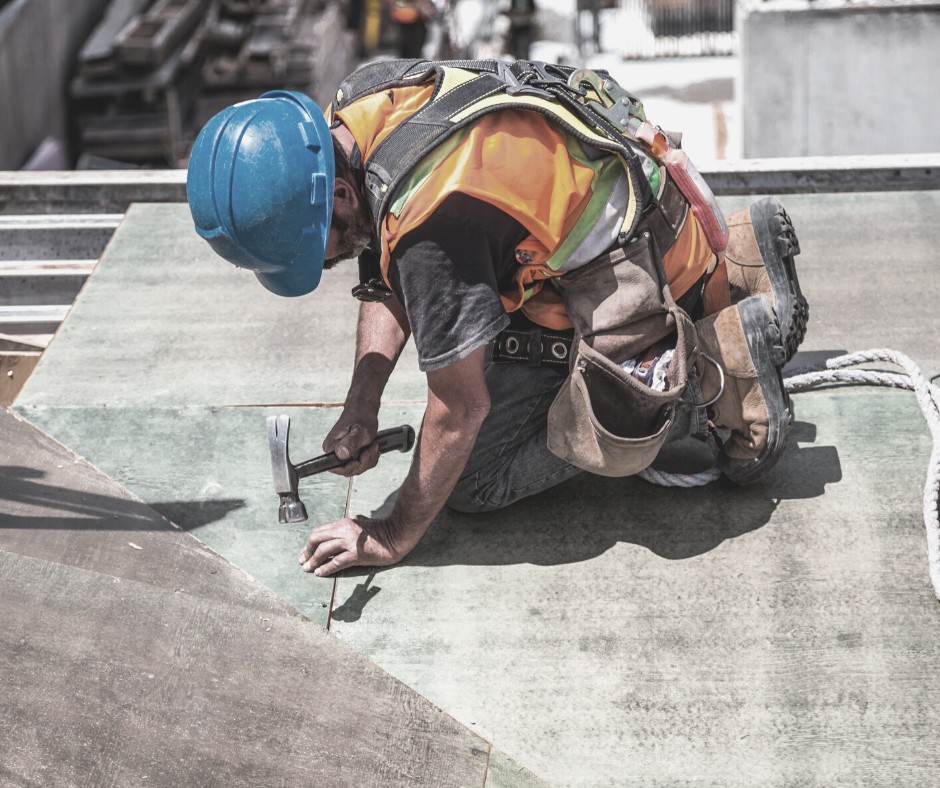
1. How Does a Horizontal Lifeline Protect Workers?
Taking a wire-rope system as an example, the wire rope is secured by anchorage devices. Personnel wear full-body harnesses and connect to the lifeline using compatible connecting equipment, allowing movement within the range permitted by the design. It is not a wire rope functioning independently, but a fall protection system that must be correctly configured and used as a complete assembly.
Depending on the product and design, the system may be used for two types of protection:
Work restraint: The lifeline position and connection length prevent personnel from reaching locations where a fall may occur.
Fall arrest: After a fall occurs, the system arrests the fall, limits the fall distance, and reduces impact forces.
Where a fall can be prevented, work restraint should be prioritized. The equipment configurations and conditions of use for the two applications are different and must not be interchanged at will.
2. Is Your Roof Suitable for Installation?
If personnel need to move between multiple maintenance points, a horizontal lifeline should be included in the assessment. However, when selecting a rooftop fall protection solution, priority should still be given to whether work at height can be avoided, as well as to collective protection measures such as guardrails and access platforms. A lifeline should not be adopted solely because its quotation is lower.
A lifeline also cannot replace protection for skylights, rooflights, or openings. For example, if the access route to service air-conditioning equipment passes over fragile rooflights, priority should be given to rerouting the access path, installing a safe walkway, or providing reliable guarding before determining the lifeline layout. It should not be assumed that personnel can simply “clip on” and cross safely.
When comparing options, the budget should include design and installation, compatible equipment, training, inspection and maintenance, and replacement costs, rather than comparing only the unit price of the wire rope.
3. Installation Requirements for Horizontal Lifelines: Four Key Points to Confirm
1. Are the Anchorage and Supporting Structure Reliable?
The fixing method and supporting structure should be verified by competent personnel. A fall generates dynamic loads; load capacity must not be assessed solely based on body weight, and unverified pipes or guardrails must not be used as anchor points.
2. Is There Sufficient Clearance Below?
When a fall arrest configuration is used, the required fall clearance must be calculated by considering the deceleration distance of the connecting equipment, lifeline deflection under load, body dimensions, and a safety margin. The risk of swing-fall collision must also be assessed. A roof being high above the ground does not necessarily mean that clearance is sufficient; canopies, lower platforms, and equipment may all become obstructions.
3. Are the Equipment and Number of Users Compatible?
The compatibility of the harness, connectors, lanyard, or self-retracting lifeline shall be checked, together with the permitted number of users and loads. Whether a self-retracting lifeline may be used horizontally or at an edge must also be verified against the manufacturer’s instructions. Equipment must not be deemed compatible merely because it can be connected.
4. Are the Standards and Handover Documents Clearly Defined?
Horizontal lifeline devices used in China should comply with GB 38454—2019, Fall Protection—Horizontal Lifeline Devices. Where products complying with European standards are used, the scope of application of EN 17235:2024 may be checked for permanent anchorage devices. Suitability for the site must not be determined solely based on a standard number.
Installation records, acceptance documents, the permitted number of users, and maintenance requirements should be included in the handover checklist to facilitate subsequent inspection and management.
4. How Should Fall Protection Equipment Be Inspected and Tested?
Before Each Use: Stop Use Immediately if Abnormalities Are Found
In accordance with the product instruction manual, inspect the wire rope, fixed connections, harness webbing, and locking mechanisms, and check for abnormalities such as broken wires, corrosion, wear, or deformation. Pre-use inspection cannot be replaced by periodic inspection.
Periodic Inspection: Determine the Frequency Based on the Environment
According to GB 23468—2025, Selection, Use and Maintenance of Fall Protection Equipment, the inspection frequency shall not be lower than the manufacturer’s requirements. Where the manufacturer does not specify a frequency, inspection shall be carried out at least once per year. Under conditions involving frequent use, corrosion, or other harsh environments, the inspection frequency should be increased. Inspections shall be performed by competent personnel, and records shall be retained.
After a Fall: Do Not Return the System to Service Based on Appearance Alone
After the system has sustained a fall impact or damage is identified, it shall be immediately removed from service and isolated, then inspected and handled in accordance with applicable standards and the manufacturer’s requirements. Do not suspend heavy objects from the system to perform an improvised “pull test” as a substitute for professional inspection or testing.
In addition, practical training on donning, connection, and usage limitations should be completed before the system is put into service, and rescue personnel, equipment, and procedures must be implemented. Arresting a person’s fall does not mean that the rescue has been completed.
Conclusion: Identify the Risks Before Selecting Equipment
Fclimb is committed to helping enterprises establish reliable fall protection safety systems—from professional inspection and training to equipment selection—supporting the achievement of inherently safe production.